But, as the days tick away toward a referendum on what Scots think about their future ties to the United Kingdom, three large groups of interested parties are conspicuously absent from the debate — the English, the Welsh and the (Northern) Irish.
On Sept. 18, people resident in Scotland and over the age of 16 will answer a simple question: “Should Scotland be an independent country?”
The consequences are potentially breathtaking: for the first time in 307 years, Scotland could break away; the United Kingdom could be not so united; Great Britain could be somewhat less great, geographically at least; Scotland could be free in a brave new world.
Last week in Brussels, President Obama departed from America’s vaunted neutrality in the debate to say that, while it was “up to the people of Scotland” to determine their destiny, “we obviously have a deep interest in making sure that one of the closest allies we will ever have remains a strong, robust, united and effective partner.”
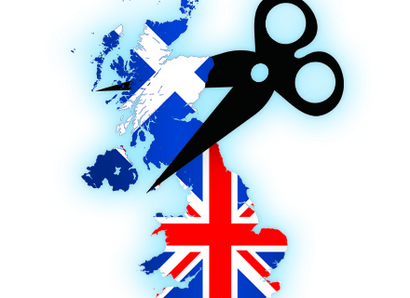

The vote will be closely watched by other Europeans eyeing independence — the Catalans in Spain, for instance. It might even inspire thoughts further afield — in the Middle East, perhaps, where the debate over a two-state solution is far more intractable.
Know more about this new clicking here: http://www.nytimes.com/2014/06/13/world/europe/scottish-independence-vote-cuts-england-wales-and-northern-ireland-out-of-the-equation.html?ref=world&_r=0
Know more about this new clicking here: http://www.nytimes.com/2014/06/13/world/europe/scottish-independence-vote-cuts-england-wales-and-northern-ireland-out-of-the-equation.html?ref=world&_r=0

No hay comentarios:
Publicar un comentario